skip to main |
skip to sidebar

This book, like many of Dickens' works is a commentary on aspects of society - in particular in this case the legal system and the Court of Chancery in common law England. In this book, Jarndyce and Jarndyce is a case being heard in the Chancery that has been running for an extremely long time. No one involved in the case, least of all the lawyers seem to understand the legal status or why it has come around in the first place. With promises of pay-outs, it draws in its "wards" who spend their lifetimes and all their money on waiting for their own beneficial results.
The plot is full of uncertainty, almost definitely a reflection of the Chancery process and is centred around Esther Summerson, a young girl taken in by Mr Jarndyce (the only so named in the book who also refuses to have anything to do with the case). The book also focuses on Lord and Lady Dedlock (aptly named), an aristocratic couple living in a huge mansion that is represented as unfeeling. The Dedlocks, along with their many lawyer Mr Tulkinghorn (among others) sit on one side of the suit while everyone else is on the other. Mr Tulkinghorn is represented as a dangerous man, making his fortune off of other people's secrets and living by threat and intimidation. We also meet other characters, including two of Mr Jarndyce's other taken-in children, Richard who is to be enticed into the suit and the love of his life (and cousin)Ada. The young, homeless Jo becomes the object of the book when information comes to him and it is amazing the attention that the rich will direct towards such a human, when it suits them. Throughout the book this is the case, with Mrs Jellyby, mother to Caddy who is the ultimate philanthropist, giving the family's money to Africa while totally ignoring the starvation and mess of her only family and her husband's fading sense of self.
Esther's character serves as a light in the 'bleak' nature of the book. She appears to have a positive outlook and an undeserving view of herself which results in her being well-liked in general by most people in this book, regardless of the suit.
This is one of the best books I've read in awhile. Utterly memorable and completely intricately woven plot that keeps itself through the 800-odd pages and gives brilliant social analysis.

This was Tolstoy's first novel, although each section of the book was originally written separately to create a biography. Some say this book documents Tolstoy's own life, although there are obvious differences in some of the biography, a reader feels that a lot of the feelings and actions are resonant to Tolstoy's own experiences. Similarly to Doyles Paddy Clarke hahaha, the first part documents the more run-of-the-mill instances of life as the main character as he moves from care under his mother, to hunts with this father and brother, to life in Moscow. All of this is characterised by first loves, the illness of his mother and new friendships. The second two sections of the book document his education, friendship with his brother and entrance to university.
I found this book different to the typical Russian novel, it didn't have the same dramatics that books like Dostoyevsky's Crime and Punishment. Despite this, it is based on the same view of society - that is with an emphasis on the upper aristocracy. The main character in this book is also not paticularly likeable, although his attitude given his upbringing is understandable. At various times throughout the book, Nikolai shows himself to be self-centred, arrogant and his actions often seem to be performed out of spite. In trying to follow the hefty footsteps of his brother. There is something about Nikolai though which shows a slightly nicer side of his personality, usually when he is being himself rather than acting up to the expectation of his family and friends.
I enjoyed this book although I wouldn't rate it in my favourites. It is fairly unexciting and there is no real plot to follow but it exposes a side of high class society and its effect on someone growing up in that atmosphere. I will need to read Tolstoy's more famous works before I come to a final decision on my opinion of Tolstoy.
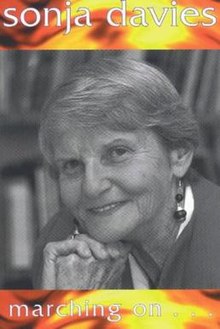
This is the sequel to the book Bread and Roses that I reviewed a few entries okay. It documents the latter part of Sonja Davies' life including the making of the movie Bread and Roses, her entry into Parliament as the MP for the electorate of Pencarrow, her daughter's struggle with Motor Neurone Disease and her eventual retirement to a house in Masterton.
As in her other book, Davies does a remarkably honest and passionate job of representing what it was to be a woman in the largely male world of the House of Representatives, alongside current and former Labour MPs such as Phil Goff (now leader of the Labour Party) and Helen Clark (now Head of the UN Development Council) and against benchmarks of 1980s and early-1990s National politicians like Robert Muldoon (who infamously called Davies Granny) and Labour politicians (like Roger Douglas, now an MP for Act). On top of all this, Davies' daughter was diagnosed with Motor Neurone Disease. It is amazing that Davies who had already lost her husband and then her son was able to survive through all of this with the same determination that she did.
The book also documents her many overseas trips which continued to various conferences around the world and meant she met some of the leaders of women's rights and the various peace and anti-nuclear groups at the time. It is even more amazing to consider that in and among all these various events, her previous experience with TB meant she frequently caught bouts of pneumonia and would be very ill for large amounts of time. Davies retired to a house in Masterton which she created to her liking in the 90s. She maintained interests in gardening and was received regularly by her grandsons.
This is another impressive book by Davies, possibly on par with her previous one and of even more interest to me as it started at around the period I was born. Sadly Davies died in 2005 but even her long life was amazing considering her busy life and the fact that she relied on one lung for most of her life. I would highly recommend this book to anyone with an interest in New Zealand historical figures and politics.

This was a recent purchase because
1) I love the Irish and
2) I had never read anything by Roddy Doyle before.
This book more or less encompasses what it is to be a boy in the setting. The beginning of the book is written in a style quite similar to stream-of-conciousness and it takes us through Paddy's early exploits and introduces us to his family, specifically in the earlier years, his brother Sinbad who tags along on his adventures and appears to cramp his style. While it seems at the beginning that Paddy is just an ordinary boy, the book expands on his realities and relationships and the family atmosphere he is surrounded by serves as a central part of the story.
Paddy becomes an interesting character for the reader early on in the book. His thoughts on mundane daily activities are exposed to the reader and are continually changing through his childhood. The relationship between his parents gets worse and worse and eventually Paddy takes his parents' problems into himself. He starts to see Sinbad as a fellow listener, but when Sinbad doesn't wish to be involved, his actions towards his brother become abusive perhaps reflecting what he is seeing in his parents.
The writing in the book is flawless, the Gaelic phrases throughout intensified my wish to learn it (but damn it's so hard to pronounce anything). The continued events throughout the book and the slow disintegration of Paddy's family acts as a constant backdrop and shapes the events and his behaviour throughout the book. Not much more can be said without going too deeply into the plot.
A Booker Prize winner, this book is well worth a read.

After only previously reading Kerouac's The Dharma Bums I decided to read this which I acquired a fair while ago. I recently did a Facebook quiz that told me of all classic books, I am this one. Hmmm.
This book, narrated by Sal Paradise follows his journey across America and then back across in the opposite direction. A significant portion of his journey is spent with his buddy, Dean Moriarty, a slightly mad, ex-con who does whatever he wants, whenever he wants, however he wants, even if it means leaving half wrecked cars wherever he goes. The rises and falls of Dean determine Sal's stop and start journeying throughout the book Through a fog of alcohol, drugs and general craziness; the pair eventually end up in Mexico.
The characters in this book are very believable, their histories are spelled out throughout the book in a semi-detached fashion. I especially liked the description of Old Bull Lee (modelled on the author William S. Burroughs).
I enjoyed parts of this book and its contribution to the "Beat" generation. I also found some parts of it excessively trying. Most of all though, this book is an interesting read about the abyss that occurs between youth and freedom.
I enjoyed this book far more than others I have read by Atkinson. It tells the story of Ruby Lennox, starting off as a young girl whose state of affairs has been created by generations of her family. The book switches between Ruby's life and her understanding of it back to her mother's and grandmother's generations and how they have impacted on the existence Ruby is offered. There is a lot to be seen from the way the lives of these women are constructed around typical gender roles, while Alice, Ruby's grandmother spent her days cleaning, mending, taking care of the children and housekeeping whily Bunty, Ruby's mother spends her days doing what can only be seen as a mask for what her mother did, which in a different era becomes a conception of nothing. The parts of the book that go into Ruby's genealogy and how her grandmother and mother came to be the women they are is detailed in "footnotes."
We watch Ruby grow into a young woman throughout the book. Seeing the perceived mistakes of her sister who she goes for years without seeing, she constructs an understanding about the world from her experiences as well as the experiences of her maternal family, where it seems male figures have been markedly absent. The book is a reversal of the age-old genealogy through patriarchy as Ruby discovers and understand the world primarily and distinctly through females.
This book is written amazingly, the language is beautifully done and the plot is effectively woven through genealogical history. I far preferred it to two other books I have read by the author and I think this work is a masterpiece.
No adequate book image sorry.

This autobiography documents the amazing life of Sonja Davies; a prominent New Zealand feminist, trade unionist, member of the peace movement and MP for the Labour Party in the late-1980s to the early-1990s. Davies shares with amazing insight her early life, born as an illegitimate child in 1920s New Zealand brought up by her grandparents in Oamaru. The chapter is entitled "A different childhood" and this conceptualises her life very well. Later on, living with her mother and life as a child in New Zealand at this time is most accurately represented. The book continues as Davies left shcool early to enter the workforce, went to nurses school and eventually became a vital part of the movement for trade unions in New Zealand. Amidst all of this, she marries at 17, before falling in love with an American marine, later killed in the Pacific part of World War II. Giving birth to her first child, she becomes very sick and this begins her years-long battle with tuberculosis. Despite this, this amazing woman came through all of this, married and continued her amazing work as an activist in New Zealand Labour Federations, child care centres and her first political contests.
There is no doubting that Davies had a difficult life, from the very beginning she was different, a 'love child' with a colourful family life. It is made clear here that this woman who thinks she was just one of many was a hero in many ways and definitely a huge figure. This book covers her life up until the 1980s and how she dealt with the many challenges life threw at her. There is nothing innately astonishing about Davies' writing, but it is her firm honesty and compassion to the cause which catches the reader. Her relationships with a wide variety of prominent New Zealand names including Norman Kirk (former NZ Prime Minister), Walter Nash (former NZ Prime Minister), Mary Varnham (former Labour Press Secretary for David Lange) and Sue Kedgley (current Green Party MP). The latter two co-editors of another book I have reviewed which Sonja Davies also had a chapter in. It is also clear that Davies had a deep connection with her environment, living all over New Zealand at various times in her life and appreciating the sights it has to offer.
The one downside I would suggest this book has is its confusing timeline. The subtitles suggest the book is written chronologically, but at many times different things happening at similar times are in different chapters. I can obviously understand why she would want to separate aspects such as her son Mark's tragic death but this did confuse me as a reader and I think it would have represented the many things this amazing woman did even more if they had all been included in the same chunk. A further review of her second book Marching On... will come later.
Overall an amazing read (apparently also made into a movie) documenting the life of one of New Zealand's forthright figures in trade unionism. I would highly recommend it to any New Zealander, regardless of their political stance. It is a highly historical account of New Zealand and growing up in New Zealand.
Sonja Davies died in 2005.


