skip to main |
skip to sidebar

This impressive book sets out Maori aspirations for more political, economic and cultural self determination in the face of ongoing settlements with the Crown. Durie discusses this self determination under six distinct headings which are separated as chapters. These are: the environment, cultural identity, social policy, land issues, fisheries and the Treaty of Waitangi. In each of these areas he looks at the power historically held by the Crown and also looks to more recent developments which have influenced Maori relationships with the Crown.
As well as this the book is aspirational about what could be offered to Maori in the future and how this can be extracted through the current framework of the public sector. By the end of the book, ideas for how tino rangatiratanga can best be offered to Maori is shaped within possible future governance and sovereignty structures. He offers the idea that sovereignty can be maintained both at a tribal level and at higher levels of governance, allowing for both arguments which have traditionally been the focus of much debate.
Through this, Durie focuses on the 1835 Declaration of Independence by Maori iwi as an important constitutional document alongside the Treaty of Waitangi. He sees the sovereignty aspired to by Maori as existing within and not apart from the wider nationhood of New Zealand.
This is a very well written and argued book. I highly recommend it to anyone interested in Maori and constitutional law in New Zealand.

This book tells the story of the team who came to a conclusion based on Type 1A Supernovae data that the expansion of the universe is accelerating. This is out of a choice of three models - either that it is slowing down due to gravity and will eventually come to a stop before collapsing in on itself and culminating in a "big crunch." The second option is that the acceleration of the universe is constant and it will keep expanding at the same rate. The third is obviously the one which was proven by their data - that the expansion of the universe is in fact accelerating.
The team (known as the High-z Supernova Search Team) used large telescopes to look for type 1a supernovae. This kind of supernova is rare - there is approximately one per galaxy per century, but since the universe is pretty big, high powered telescopes can be used to find these and measure their redshifts (redshifts mean they are moving away, blueshifts moving towards us). Kirshner has recounted the methods the team used and the other team they were competing with. He has also looked at how a variety of different universities across several countries colluded to get these results.
Kirshner has tried to keep this book relatively unscientific. In other words, it is made for the lay-reader and written so the wider public can understand how this operation played out, what it means and its ramifications for modern physics. In this mission, he did a relatively good job. It seemed sometimes like he was trying a bit too hard to amuse the reader with amusing anecdotes and jokes. Although this was a good idea, it was a little too often and came across or desperate. The book was highly interesting without this added information.
I thoroughly enjoyed it and recommend it to anyone interested in what's going on in the world of science.

Susie Orbach famously acted as a therapist to Princess Diana and wrote Fat is a feminist issue. As well as this, she was one of the driving forces behind Dove's "real beauty" campaign of recent times. In this most recent book, Orbach has explored the changeable nature of our bodies in the 21st century. This includes the changes in BMI, the new surgeries available all over the world and the fight to look Western with eye surgeries in Asia, leg shortening procedures in Scandinavia and phalloplasties, which I'm sure I don't have to tell you about.
Through all of this new technology, Orbach confronts the reader to explore our relationships with our bodies. Through this, she demonstrates how the media has an influence on the way we view our own bodies. With evidence, including the amount of digitally manipulated images we see per day, Orbach makes it clear that we are underestimating the role of the media and the environment in these self-perceptions.
As usual, Orbach has provided a well-written and evidenced account that is both persuasive and thought provoking. I would have preferred if the book had been a bit longer or a bit more detailed, but as it was which was a relatively small book, it could serve well as part of a larger series.
I thoroughly recommend it.

I had actually read this book before a few years ao. There is no doubt in my mind that Hornbacher is an incredibly gifted writer and the fact that she wrote this book at such a young age is testament to this. Now with two other books to her name, both of which I have read I thought I'd read this one again.
Wasted documents Hornbacher's descent into bulimia as a child and her struggle to gain some control over her behaviours which flip-flop between anorexia and bulimia. She gives a unique insight into the life of someone whose life is governed by starvation, binging, purging and a battle with her own mind that never seems to end. Hornbacher was offered an ultimatum when she entered hospital: continue to die or accept the help she so desperately needed and learn to live. She chose the latter and we get the impression in the opening pages of this book that she has remained relatively healthy ever since.
I do have a couple of complaints about this book. Firstly, she constantly documents her weight at different stages throughout her illness. This struck a note of competition that is often seen between eating disordered patients. It could be argued that this reflects her mindset at different stages throughout the book. That is, her mind revolves aorund the number she sees on the scale. However, these numbers could be incredibly triggering for anyone with an eating disorder who reads the book. It also focuses on weiht as a measure of the seriousness of her eating disorder, which while seemingly logical is not necessarily helpful.
I have read two other of Hornbacher's books: one is another memoir about her diagnosis of Type I (rapid cycle) Bipolar disorder and the other is a fictional book about grief. Both were more maturely written than this one was and it seems her writing is only improving.
I look forward to her next book.

Most people remember the shocking kidnap of Natascha Kampusch and her eventual escape of her attacker and return into the world in 1996. Kampusch, now a television presenter, has written a book about her experiences - the terror and fear she experienced as a captive of Wolfgang Prikopil who jumped under a train soon after her escape.
It is clear from the writing in this book that Kampusch received help from therapists to understand her experiences, both as an unhappy small child prior to her kidnapping, and as a victim and survivor of the man who subjected her to eight years in captivity. Kampusch is able to write clearly about her experiences and she reflects on them in a useful way throughout the book that I think is extremely admirable. Not many people would be able to go through what she did and come out the other side, but Kampusch has come to understand and reflect on her experiences and her ultimate survival to the benefit of herself and others. As well as this, she rejects the label of Stockholm Syndrome that was imposed on her after she escaped saying it denied her autonomy and reinforced her status as the victim. She was also able to objectively look at the media response which contributed to a form of revictimisation.
This book also highlights the police processes which took place after her capture and it is clear that from the beginning there were many mistakes made. Important leads were also not followed up in the process of the investigation and several opportunities to follow up Prikopil ultimately failed. It seems like the police expected some sort of obvious monster and the failure to find this monster they sought meant they did not take good tips seriously. Then again this was probably an unheard of case at the time and this story could contribute to police efforts in Austria in the future.
Overall this was an absolutely amazing book. Kampusch is an impressive women who is able to recount her experiences with understanding far beyond her years. I would recommend it to all.

The first thing I would say about this book is that it does not at all measure up to Ali's first book. In her move to America, Ali has embraced Western culture as superior and something for all nations to aspire to. I think Ali puts far too much faith and clout in the practices of Western society without the critique that is also due to it. She also seems to put too much blame on the plight of families like the one in which she grew up, to Muslim culture. This is despite the fact that she grew up in three different countries in the midst of civil war and that there were a variety of other factors that could have contributed to all the horrors of her upbringing.
As well as this, Ali's views seem to have become more extreme over the last few years. Despite being an atheist, she suggests that Christians convert their Muslim counterparts to Christianity. While I agree with her on the point that feminists need to do more to address the high rates of honour killings and other phenomena, her proposed solution falls far short. Not only does it come across as condescending on her part (e.g. I am an atheist but since you are not like me, you should become Christians) but it is also put across as an easy solution, when in reality many people don't actually want to change their religion because the West says they should. The connection between Muslims and terrorism that she puts across is also problematic, in that most Muslims do not advocate terrorist tactics. Moreover, many of the countries that are Muslim in Africa are so poor because of tactics by Western countries and she does not really address this.
All in all, while I can understand why Ali initially took the political viewpoint she did and I think she has bravely survived everything that's been thrown at her, I do not agree with many of her thoughts in this book.

This book details one of the most important medical discoveries of recent times - that our brains are subject to change in function and structure throughout our lives. This goes against years of thought in the scientific community, which saw the brain developing until late childhood and then declining until death. Doidge, in this book gives us the science behind neuroplasticity (as it is now in common parlance) as well as case examples of people who have come back from seemingly irreversible brain trauma to live relatively normal lives.
This book was effective in its message and the case studies provided real-life examples of how the plasticity of the brain can operate in healing. I do feel that although Doidge admitted there was limits to the plasticity, his tone throughout the book seemed to suggest that neuroplasticity could be used to "cure" any number of things. I can understand why it was exaggerated of course, but I do think this toned down the accuracy of the book a little. I also thought there was far too much reliance on Freudian theory. Doidge rightly points out that Freud theorised neuroplasticity far prior to it becoming a serious scientific idea, however, Doidge talks up Freud throughout the book and there is little concentration on the well documented fact that Freud's own research methods were fraught with inaccuracies.
Overall I think this is a good book. It's fairly well written and it's full of interesting facts. I find the concept of neuroplasticity intriguing and I hope popular writing expands on it more in the next few years.

This is an amazing memoir detailing the life of a woman that undoubtedly shares parallels with the lives of many women who suffer in silence. Ali has lived in Somalia, Saudi Arabia, Ethiopia and Kenya. She finally escape to the Netherlands running from an arranged marriage when she was 22. Since the publication of this book and the creation of a movie detailing the plight of Muslim women, Ali has gone into hiding after receiving numerous death threats.
Beginning with her first memories as a child living in Somalia, we are plunged into the reality of growing up in a war-torn society. Taunted by other children for her kintir (clitoris), at the will of her grandmother, Ali received full female genital cutting at the age of five, without anaesthetic. Her grandmother asked her to be brave while she fell into an unconcious state, while her four-year-old sister's howls and struggles caused her to have lifelong scars on her thighs. Her brother also received genital cutting with tears running down his face. After this procedure, the same man came back to inspect them and remove the thread - leaving a thin bumpy scar between her legs. What Ali gives us is the extremely painful reality of a still common practice in many parts of Africa and the Middle East. A young girl is operated on in this manner to preserve her virginity and to remove parts of her considered to be impure. As a result, sexual pleasure later in life is near impossible and the side effects stretch through eternity.
Details like this continue throughout the book with Ali undergoing a vicious beating at the hands of her mother and her Q'uran teacher. This stopped the regular beatings from her mother, but only for a short time. Scenes like this play out in Ali's life. In her teenage years, she became a fairly devout Muslim and started questioning her beliefs about the status of women. When she asked questions about this, which made her unpopular. This all contributes to the bravest moments of Ali's life - where she was finally able to leave her past behind and bravely embark into a life as a refugee in the Netherlands.
There were some parts of this book which surprised me. In the latter half of the book Ali became a politician in the Dutch parliament. Although Ali clearly knows the difficulties of moving from devout Muslim society to a developed country, she seemed to adopt some fairly harsh anti-immigration and anti-welfare attitudes, seeing that if a refugee moved to the Netherlands they should be able to start work immediately - just as she had. While in her experience, this worked, many women in this position would not, I imagine, be able to recreate their lives as adeptly as she did. An obvious example of this would be her sister who moved soon after her and suffered in her new environment. As well as this I am not as anti-Muslim as she became towards the end of this book, in my view obviously there are practices which need to be changed in many parts of the world, but not all practicers of Muslim culture make use of the same extremes she grew up with.
Despite this personal political difference with Ali, I think this is an absolutely astounding book. Ali is a brilliant writer who portrays her life with emotion and bravery. I think this is a gutsy and wonderfully written book.

Paul Farmer is a doctor of medicine. He has worked all over the world with the dispossessed, the sick, the dying and most of all with the poor. Farmer is among the few medical professionals who as well as giving his time to those who are less fortunate than us has set about to attack the institution that keep these "pathologies of power" in place. What Farmer gives us with this book is anecdotes of patients of his from all over the world as well as statistics that put the public health system in these countries to shame, and put the rest of us to shame as well for allowing this to go on.
Throughout this book, Farmer exposes the very institutions that benefit most from a health system that fails literally millions of people. He expresses frustration where an easily solvable problem in medical terms is unable to be solved because the appropriate drugs simply aren't available. Diseases such as tuberculosis, which are curable in the vast majority of cases with relatively inexpensive drugs. It is largely because these drugs are not available that medical professionals have seen a huge increase in the amount of cases of multi-drug-resistant TB. These are especially telling in prison populations, where often a prison sentence can also become a life sentence.
Furthermore, Farmer expands on this to confront why medical ethics courses largely stick to the plight of those with the fortune to be able to access the right drugs or even to be able to sign their rights away. He sees public health as essentially lacking even among organisation such as the World Health Organisation. More than anything this book stands as a call to action for those of us who find it easier to turn a blind eye. It is both personal with a large amount of anecdotes and statistically sound in its reproduction of the plight of people all over the world.

This book is a phenomenal look at the problems of capital punishment in the USA. It is written by a nun and centres around visits she had with two prisoners, both on death row. The basis of Prejean's argument is that capital punishment is extremely harsh and that such a punishment should not be inflicted at all if it cannot be inflicted fairly, which obviously it hasn't been.
Prejean met Pat Sonnier when he was on death row for brutally killing two teenagers. She first began writing to him as she felt that she needed to be doing more for impoverished people as a nun and as a Christian. We hear chilling accounts of the death penalty and its trials and tribulations over the last century. Prisoners who required five currents of electricity to die over a period of over quarter of an hour; incidents of prisoners catching fire in the process; and one failed attempt for a prisoner to be killed by the jolts. We learn that not only is the electric chair an instrument that does not always do its job properly, but that its infliction is often intensely painful.
As Prejean continues her story of visiting Sonnier and sitting through his many appeals up until his death, she continues relating the inconsistencies of the death penalty including differential sentencing procedures based on race, wealth and a multitude of other variables. She also includes statistics from other countries who use the death penalty, which show a high number of juvenile executions (i.e. infliction of the death penalty on someone under 18 years of age) and the death penalty disproportionately being handed to those who society find it most easy to tread on: the powerless. Despite the US Supreme Court's finding that the death penalty was unlawful, many states have overruled this and continue to use it. Although this book is now fairly dated, the statistics remain similar. Amnesty International's website shows that in the USA, the race of the victim is the most reliable predictor of whether or not the death penalty will be received. More recently, an astonishing 1/3 of inmates would have received a life sentence rather than the death penalty if their victim had been white. Furthermore, it is estimated that 5-10% of people on death row have serious mental illness, despite international laws which prohibit the exercise of the death penalty on these people.
Prejean gives us an astonishing look at how much all these variables come into play as she meets a second death row inmate, Robert Willie. She faces more adversity this time and has trouble even entering the prison, despite a guarantee to an inmate of a spiritual adviser if he/she chooses. It is at this point in the book where Prejean also begins to take the families of the victims more into account, after the families of Sonnier's victims expressed upset at being ignored. This leads Prejean to join a victims' rights group and it is here that the political message she is trying to get across becomes clear.
This is a brilliantly written book. It gives an astonishing account of life on death row and provides statistics and information on the practice of capital punishment in the USA. I would recommend it to all.

We've all heard of the terrible suppression of abuse in the Catholic Church in recent times. All over the world, stories have spilled out about the abuse of children in the Catholic church, and a church hierarchy that failed to act in a way to stop the abuse. This book is about a similar abuse of power, but this time in the Anglican Church in New Zealand.
Deans applied to be ordained as a priest in the Anglican Church in 1982. A priest in this institution is (unlike a Catholic priest) entitled to be married and entitled to be female. As was normal practice, Deans was given a spiritual guide and mentor. This man was to become her abuser and the man she risked everything to expose. Deans was unfortunately not the only victim of this man, as she was to find out women had been assaulted and abused by him before and reported him, but to no avail. Deans and some of the other women made it their mission to make sure no more women got hurt and to make sure the Anglican Church took responsibility to make sure the same thing could not happen again.
This book is a daring one. The man involved is not named - although I believe he has since been outed. Deans aims to show the respect she feels for the church and in the same breath wishes to expose those who would give that church a bad name. This woman is obviously gutsy and to stand up to her abuser like this and to demand change shows a survivor attitude that resonates throughout the book. Deans writes exceptionally well and shows us the battle for recognition she faced, as well as how this battle affected her personal life.
This is a brilliant book about brave survivors taking into their hands a fight and a responsibility, which was to forever change the outlook of the Anglican Church in New Zealand. I would recommend it to all.

I read this book for a class I am taking on sexuality this trimester. Pretty much the entire course is based around Foucault's conception of sexuality so although it's been a long time since I finished it (I am extremely behind on book reviews), I can remember the essence of his argument. Foucault's take on sexuality is in contrast to the one in vogue at the time - that is the repressive hypothesis, which expounded that 'natural' sexuality had been repressed and ignored by all levels of society, in particular the bourgeoisie. The social movements of the 1970s sprang out of this as an opposition to repression that was seen to be taking place. Foucault argues against this belief, indeed his argument is almost totally a social constructionist one. Rather than a repression of sexuality, Foucault saw quite the opposite; an explosion of discourse surrounding the topic of it, beginning in the Victorian age.
Foucault also puts forward in this volume that concept of bio-power. The juridical model of power assumes a hierarchy with those at the top of hierarchy as oppressing those beneath. Bio-power, by contrast involved a range of techniques aimed at controlling the body and populations. This power exists not just at the top, but rather is enabled at every level of society in what Foucault terms cycles of pleasure and power.
Foucault is the most cited social scientist ever. He has overtaken Marx, Freud and Weber in this accomplishment. He has become the beginning of a much larger move towards focusing on a constructed society and a less obvious model of power. There are many critiques people make of Foucault, many of them are fair critiques. I'm not writing for a journal so I'm not going to delve right into my criticisms of Foucault's novel.
I found this work surprisingly easy to read, after hearing people talk about his writing in the same words they talk about Max Weber's. It was a relief to be honest to be able to get through this book and actually understand what he was on about, which is often difficult with other authors. I would definitely be keen to read more Foucault, I just wish I wasn't so bogged down in assignments!

On the one hand, I was surprised by some of this book. The cover and the taglines on the cover made me think it would just be rehashing of the undoubted evils of Fritzl's well-known crimes. However, it firstly focused on Fritzl's upbringing and his early involvement with the law, as well as his relationship with his wife and the eventual decline into the story we all know so well. The beginning of the book has a special focus on the contribution that growing up in Nazi-occupied Austria had on the path Fritzl took, as well as his apparent admiration on Adolf Hitler. He offers no evidence or explanation to measure the actual influence of the historical period or "national socialism" in general upon Fritzl's personality or even upon his crimes. However, he continues the comparison to Nazi Germany and occupied Europe throughout and compares the trapping of Elisabeth and her children in the basement to concentration camps. It is obvious here that Hall has taken advantage of the part of Europe where this happened to make a tenuous at best connection.
The author also turns an already shocking story into a narrative from the mind of Fritzl. He was not interviewed for this book and his thoughts on entering the basement he built for the first time would surely not be known to a tabloid journalist. It seems here that Hall is adding unknown, unneeded detail to add excitement to his story. However, the interviews conducted with friends, family members and tenants of the building in which Fritzl and his family left and in which he imprisoned his daughter and their children were a helpful and informative addition.
A point I liked about this book was the focus put on Elisabeth as a survivor rather than a victim. Continually, Hall refers to the amazing fact of her survival and her care for her children who she tried to give as normal life as possible under impossible circumstances. Some of the words used to describe those Fritzl imprisoned range from insensitive to cruel, however, which lends no credibility to the author. His writing is also nothing to be raved about and attempts at best to preserve the image of this book as one about an "evil" man. It is probably one of the worst written non-fiction books I have read in awhile but its subject made it interesting and no doubt a quick seller.

In this amazing book, Brian Greene presents the intricacies of superstring theory in the same way that Stephen Hawking opened our eyes to black holes with A Brief History of Time. Greene first runs the reader through Newton's theory of gravity, Einstein's theories of relativity and special relativity as well as the beginnings of quantum mechanics and the lead-up to string theory.
String theory proposes that beyond the smallest particles found thus far, that is quarks, there exists tiny vibrating strings which form oscillating loop patterns. Greene talks the reader through the main principles of string theory including tension, symmetry and the energy of strings and their oscillating principles. We are introduced to the first theorists of string theory as well as the original hesitancy of the physics community to accept it firstly as a theory and secondly as a possible candidate for the elusive grand unified theory.
Greene also presents the idea of super-symmetry (which adds the 'super' to string theory). Theorists postulate that every elementary particle can be partnered by a 'super-particle' that differs by half a spin. This proposes a whole raft of new particles that's size and mass can be calculated theoretically but that have not been scientifically proven.
The third major proposal this book puts forward is that of hidden, "curled-up" dimensions, possibly that are so small we cannot see them. That is, we accept the three spatial dimensions and time as a dimension, but the current view of the physics world is now that of ten or maybe even eleven dimensions. Greene himself did some of the foremost research on this comparing the tiny dimensions to Calabi-Yau manifolds. These are virtually impossible to represent on a 2-dimensional page but Greene does a good job of creating these tiny dimensions in the mind of the reader, despite some initial brain fizzle.
I hold high hopes for the ability of the Large Hadron Collider to produce a Higgs boson
I can't really put everything in this book in the review because there is simply so much material. I highly recommend it to anyone interested in physics or in the nature of the universe. A brilliant read.
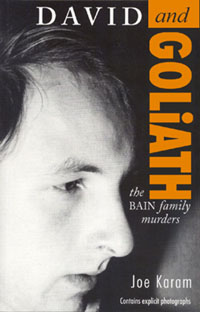
The murders of the Bain family occurred in 1994 in Every Street, Dunedin. On the 20th of June, Robin Bain, his wife Margaret and children Arawa (19), Laniet (18) and Stephen (14) were shot in the early hours of the morning. David was later arrested and charged with their murder. His conviction was overturned by the Privy Council in 2007 and a retrial in 2009 returned a 'not guilty' verdict.
In this book by Joe Karam (a former New Zealand rugby player, two main pieces of evidence that eventually contributed towards the overturned conviction are presented. Karam effectively pieces together the events leading up to the 20th of June and analyses the work of the Police who eventually arrested and charged Bain. In an unprecedented case in New Zealand, vital evidence was misplaced and moved. In addition to this, important tests which could have conclusively ended the case right there and then were not run. Furthermore, legal advice offered to David, as well as the evidence presented by his defence counsel in court was insufficient.
As well as outlining the failure of the Police to adequately deal with this case, Karam presents two vital pieces of evidence which he believes exonerate David from guilt. The first has to do with a pair of glasses and a misplaced lens and the second involves a message left on the computer and how quickly David could get back from his paper run. I found the second piece of evidence most helpful and most likely to point to the innocence Karam suggests, but I still don't believe the case is as open-shut as he suggests.
Additionally, Robin Bain displayed many more signs of someone likely to have a meltdown than David. He was about to be outed by his daughter, Laniet for sexual abuse throughout her lifetime, he was living in the caravan out the back of the property and he felt as though his world was falling apart. David on the other hand was doing well performing, had good friends and was doing the best he had in awhile.
Although it is clear that the Police investigation had many holes and that evidence was destroyed it is my opinion that no one will ever know who fired the gun that day. The evidence presented in this book is persuasive, enough so that it would and should have resulted in a not guilty verdict at the outset. But whether Bain will ever conclusively be able to prove his innocence, or whether he will be able to build a new life for himself after so many years in jail is another matter altogether.
I was impressed by Karam's writing. For some reason ex-rugby player didn't ring literary genius to me, but his argument was well presented, worded and would impress most lawyers.
I'd recommend this book to anyone interested in the Bain case.
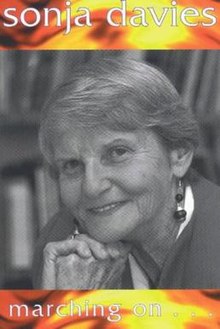
This is the sequel to the book Bread and Roses that I reviewed a few entries okay. It documents the latter part of Sonja Davies' life including the making of the movie Bread and Roses, her entry into Parliament as the MP for the electorate of Pencarrow, her daughter's struggle with Motor Neurone Disease and her eventual retirement to a house in Masterton.
As in her other book, Davies does a remarkably honest and passionate job of representing what it was to be a woman in the largely male world of the House of Representatives, alongside current and former Labour MPs such as Phil Goff (now leader of the Labour Party) and Helen Clark (now Head of the UN Development Council) and against benchmarks of 1980s and early-1990s National politicians like Robert Muldoon (who infamously called Davies Granny) and Labour politicians (like Roger Douglas, now an MP for Act). On top of all this, Davies' daughter was diagnosed with Motor Neurone Disease. It is amazing that Davies who had already lost her husband and then her son was able to survive through all of this with the same determination that she did.
The book also documents her many overseas trips which continued to various conferences around the world and meant she met some of the leaders of women's rights and the various peace and anti-nuclear groups at the time. It is even more amazing to consider that in and among all these various events, her previous experience with TB meant she frequently caught bouts of pneumonia and would be very ill for large amounts of time. Davies retired to a house in Masterton which she created to her liking in the 90s. She maintained interests in gardening and was received regularly by her grandsons.
This is another impressive book by Davies, possibly on par with her previous one and of even more interest to me as it started at around the period I was born. Sadly Davies died in 2005 but even her long life was amazing considering her busy life and the fact that she relied on one lung for most of her life. I would highly recommend this book to anyone with an interest in New Zealand historical figures and politics.
No adequate book image sorry.

This autobiography documents the amazing life of Sonja Davies; a prominent New Zealand feminist, trade unionist, member of the peace movement and MP for the Labour Party in the late-1980s to the early-1990s. Davies shares with amazing insight her early life, born as an illegitimate child in 1920s New Zealand brought up by her grandparents in Oamaru. The chapter is entitled "A different childhood" and this conceptualises her life very well. Later on, living with her mother and life as a child in New Zealand at this time is most accurately represented. The book continues as Davies left shcool early to enter the workforce, went to nurses school and eventually became a vital part of the movement for trade unions in New Zealand. Amidst all of this, she marries at 17, before falling in love with an American marine, later killed in the Pacific part of World War II. Giving birth to her first child, she becomes very sick and this begins her years-long battle with tuberculosis. Despite this, this amazing woman came through all of this, married and continued her amazing work as an activist in New Zealand Labour Federations, child care centres and her first political contests.
There is no doubting that Davies had a difficult life, from the very beginning she was different, a 'love child' with a colourful family life. It is made clear here that this woman who thinks she was just one of many was a hero in many ways and definitely a huge figure. This book covers her life up until the 1980s and how she dealt with the many challenges life threw at her. There is nothing innately astonishing about Davies' writing, but it is her firm honesty and compassion to the cause which catches the reader. Her relationships with a wide variety of prominent New Zealand names including Norman Kirk (former NZ Prime Minister), Walter Nash (former NZ Prime Minister), Mary Varnham (former Labour Press Secretary for David Lange) and Sue Kedgley (current Green Party MP). The latter two co-editors of another book I have reviewed which Sonja Davies also had a chapter in. It is also clear that Davies had a deep connection with her environment, living all over New Zealand at various times in her life and appreciating the sights it has to offer.
The one downside I would suggest this book has is its confusing timeline. The subtitles suggest the book is written chronologically, but at many times different things happening at similar times are in different chapters. I can obviously understand why she would want to separate aspects such as her son Mark's tragic death but this did confuse me as a reader and I think it would have represented the many things this amazing woman did even more if they had all been included in the same chunk. A further review of her second book Marching On... will come later.
Overall an amazing read (apparently also made into a movie) documenting the life of one of New Zealand's forthright figures in trade unionism. I would highly recommend it to any New Zealander, regardless of their political stance. It is a highly historical account of New Zealand and growing up in New Zealand.
Sonja Davies died in 2005.

According to Amazon, this astonishing book was originally written as Millett's doctoral thesis in 1968 and is now widely regarded as a feminist classic. The book looks at American literature including works by D.H. Lawrence, Henry Miller, Norman Mailer, John Stewart Mill and Jean Genet. Millett examines in depth the structures and values in the literature and the passages she quotes from each text are truly telling of the argument she puts across. The critique and analysis she provides is amazing and its in-depth look at the politics of sex is supported by the provided literature. While the reader can be stunned at these analyses, we can also see hope in the incredibly telling writings of Jean Genet.
I thoroughly enjoyed this book, it wasn't the easiest read in the world and more or less put me off at least Henry Miller's books for a good while, but at the same time it was incredibly thought-provoking of an area that has largely been overlooked as influencing public opinion of gender relations and sex.
The book also provided an interesting look at gender relations under the law of coverture in the Western world with excerpts from Blackstone's Commentaries - the foremost legal writings of the time included. It also took a look at sexual politics in Nazi Germany and Soviet Russia among others. This part of the book was so interesting I almost changed the topic of an essay plan in fascination over it. But I will leave the eager reader to devour its brilliant contents.
As well as this, there was an entire chapter on Freud, psychoanalysis and general beliefs about women's psychology. The social pretension of the concept of "penis envy" is displayed in what is remarkable from a book of the time, when these beliefs about psychology were still so prevalent.
A stellar read I would recommend to anyone and everyone.

From the author of Wild Swans and her husband comes an extremely widely researched account of Mao Zedong's life starting from his early life growing up in a family of peasants, to becoming a scholar, to his eventual iron-fisted rule of China. The book contains little known accounts from many close to Mao as well as outside critics who saw the side that the Chinese public was barely allowed to think, let alone see. Any readers of this review need to keep in mind that this is one of the first accounts of Communist China I have read which makes it difficult to read critically into a lot of what Chang is saying as I have nothing to compare it to.
One of the first arguments put forward by the authors is that Communist China was largely initially funded by Russia under Stalin. Convicing arguments such as telegrams between the two leaders, Russian involvement in the CCP (the communist party of China) and the beginnings of Russian backing in weapons manufacture as well as the ultimate goal of possessing the atomic bomb which luckily never came to fruition. While I can't comment on the accuracy of these claims; the argument seemed to have considerable backing, much of which is still not admitted by officials in China today. It becomes clear that even during the closing stages of World War II, Mao and his followers were more committed to building up forces against the Nationalists under Chiang Kai-Shek than partnering up to beat Japan once and for all. Despite elements of Russian resistance, Mao was able to recover his own army to overthrow the Nationalist government in 1949.
The book also offers a fresh perspective on Mao's beliefs through a combination of communications with other party members and other countries and his set of aims for his own Communist state and to eventually establish China as a super power. The means through which this was done are perhaps the most shocking. Mao continued to offer around 6% of his country's money to aid to the Russians and to other, smaller communist states. While this happened, the peasants farming the food to send overseas were being worked quite literally to the bone and tens of millions died in famine which was seemingly caused by Mao's policy of increasing exports of food every year until there was not even enough for his own citizens. The famine only stopped when some of Mao's top staff more or less forced him to stop the exports. They did this at the cost to their own lives, however, and Mao was to pay them back for this later.
Chang and Halliday also offer a useful account of the Cultural Revolution which was run through Mao's fourth wife known mostly as Madame Mao. This consisted of a huge clamp-down on books, music, plays and movies where the only books allowed were ones which espoused Maoism. This book has been criticised by many for blaming everything on Mao, but I don't think this is necessarily true; there were many personalities explored in this book such as Madame Mao, Lin Biao and Chou who clearly stayed with Mao through some of the most vicious periods of his rule and Madame Mao is definitely painted as a paticularly outwardly nasty woman who did whatever Mao told her to. Many people are criticised in this book for their role and it becomes clear that without his closest staff, Mao would have been unable to wreak the amount of destruction he did.
One of the things I would criticise about this book is the bits towards the end where Chang uses evidence to sum up what she believed to be what Mao was thinking at certain times. Obviously what he was thinking is something no one will ever know and no amount of biographical reconstruction can show us his thoughts about any one particular time or person.
Despite this, the immense amount of research that went into this book involving a decade spent in China interviewing various people is extremely impressive. This is really the first in-depth reading I have done on this period of China and will definitely be looking for other books to further cement my knowledge. I would recommend this to anyone with an interest in China, Mao himself or Communist regimes.

This is a book I have been meaning to read for a long time and in one of my fits of materialistic book purchasing at Vic Books I bought The God Delusion. I'm already a pretty stout atheist so I didn't read this from a religious perspective and was just curious as to Dawkins' arguments against God and organised religion in general.
I'll start by saying parts of this book are pretty heavy-handed. I can think of a few people who would put it down in disgust after reading the first chapter. In trying to dispel the notion of religion having a higher place in society, Dawkins attacks the foundations of religion from the very beginning of the book and continues to supplement his arguments with further facts. I thought Dawkins argument was majorly flawed in several respects and his overview of the different facets of religion (in particular fundamentalist Christianity) was skimmed over in not much depth and he tended to assume things about believers that aren't necessarily true. He also from the beginning tended to attack parents who raised their children as a particular religion; while I can imagine this is a significant problem he compared the anecdotal experience of one women and made it fact. He stipulated that religious abuse was just as harmful if not more harmful than sexual abuse by priests and he also seemed to doubt the validity of the trauma of childhood sexual abuse to try to make his argument stronger.
While I agreed with the conclusions Dawkins came to, his way of presenting his points did not read like a logical argument to me. He made atheism into a fundamentalist religion unto itself or presented it as such any way. His more long-winded arguments often turned into fallacies that were spread out throughout the book and his ultimate denial of religion having a place in future society was unrealistic.
I would recommend this book to religious and non-religious people alike, as it does have some interesting insights and facts into theism and atheism but it is perhaps best to keep your critical mind going while you read this book.


