skip to main |
skip to sidebar
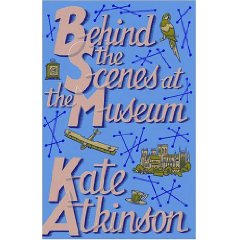
I enjoyed this book far more than others I have read by Atkinson. It tells the story of Ruby Lennox, starting off as a young girl whose state of affairs has been created by generations of her family. The book switches between Ruby's life and her understanding of it back to her mother's and grandmother's generations and how they have impacted on the existence Ruby is offered. There is a lot to be seen from the way the lives of these women are constructed around typical gender roles, while Alice, Ruby's grandmother spent her days cleaning, mending, taking care of the children and housekeeping whily Bunty, Ruby's mother spends her days doing what can only be seen as a mask for what her mother did, which in a different era becomes a conception of nothing. The parts of the book that go into Ruby's genealogy and how her grandmother and mother came to be the women they are is detailed in "footnotes."
We watch Ruby grow into a young woman throughout the book. Seeing the perceived mistakes of her sister who she goes for years without seeing, she constructs an understanding about the world from her experiences as well as the experiences of her maternal family, where it seems male figures have been markedly absent. The book is a reversal of the age-old genealogy through patriarchy as Ruby discovers and understand the world primarily and distinctly through females.
This book is written amazingly, the language is beautifully done and the plot is effectively woven through genealogical history. I far preferred it to two other books I have read by the author and I think this work is a masterpiece.

This famous book spans over one hundred years and the generations of the Buendia family living in a jungle settlement in Colombia. A family tree at the beginning of the book helps the reader to keep track of the many almost-same-named characters and who they are in the scale of things. The Buendias appear from the beginning to have a rich history and the beginning of the book tells of how the (fictional) settlement of Macondo came to be.
The book also has a sort of magical view of time. The family is cyclical in operation. Indeed it seems that many people with the same names have similar attitudes and often similar fates. This appears to be Marquez's way of showing the destiny given to people by their very birth and this is highlighted by the demise of the many sons of Colonel Aureliano Buendia only after they are brought together in the discovery of their common father.
Many of the characters in this book, especially the male ones undergo periods of great despair and speculation and all the male characters starting with the patriarch Jose Arcadio Buendia seek out solitude in their different ways throughout periods of their lives. The women in the book are also given interesting characters, in particular Jose's wife who lives almost to the end of the book and who delivers some of the memorable dialogue about the fate of the family that comes through at the end. The women seem to be firm in their wants and desires unlike the men who almost seem to let emotion dictate their every move a little too much.
I thoroughly enjoyed this book. It is full of blackish humour which perpetuates until the very end. I think it's a must-read for everyone.


