skip to main |
skip to sidebar

This dystopic novel follows the life of Snowman (previously Jimmy, seemingly one of the few humans alive who watches over the Children of Crake after a virus has completely destroyed the human population. Along with pieces of humour (New York is now New New York)and the makings of a cautionary story, the book critiques a world which has let itself die out through the vast hopelessness of human nature.
The book follows Snowman as he watches the Children of Crake and reflects on how things came to be this way. Crake was a childhood friend who dreamed of making the world a better place. He was incredibly intelligent and knew it and Snowman reflects on how Crake came to design his perfect race after watching what he sees as the dismal parts of humanity. His "children" have no sex drive except to pro-create and do not eat animals. He also works for a company who makes a whole array of strange and futuristic animals. Oryx, seemingly the love of Snowman's life is a woman who comes from a third world country after being sold as a slave by a desperately poverty-stricken mother. Her open acceptance of her previous life and lack of regret or anger confuse Snowman throughout the book.
I didn't enjoy this book as much as a lot of Atwood's other books. It is similar to many of them in its dystopic element and its critique of humanity and it is told successfully though Snowman's eyes. However, it did not have the same prose I loved so much in several of Atwood's other books. A decent read with a stunning message though.

This famous book spans over one hundred years and the generations of the Buendia family living in a jungle settlement in Colombia. A family tree at the beginning of the book helps the reader to keep track of the many almost-same-named characters and who they are in the scale of things. The Buendias appear from the beginning to have a rich history and the beginning of the book tells of how the (fictional) settlement of Macondo came to be.
The book also has a sort of magical view of time. The family is cyclical in operation. Indeed it seems that many people with the same names have similar attitudes and often similar fates. This appears to be Marquez's way of showing the destiny given to people by their very birth and this is highlighted by the demise of the many sons of Colonel Aureliano Buendia only after they are brought together in the discovery of their common father.
Many of the characters in this book, especially the male ones undergo periods of great despair and speculation and all the male characters starting with the patriarch Jose Arcadio Buendia seek out solitude in their different ways throughout periods of their lives. The women in the book are also given interesting characters, in particular Jose's wife who lives almost to the end of the book and who delivers some of the memorable dialogue about the fate of the family that comes through at the end. The women seem to be firm in their wants and desires unlike the men who almost seem to let emotion dictate their every move a little too much.
I thoroughly enjoyed this book. It is full of blackish humour which perpetuates until the very end. I think it's a must-read for everyone.

This novella tells the story of two men travelling around together, trying to find a job and to save up enough money to buy their own house. The backdrop of the story is the depression of the 1930s. George is a careful man determined to make a living and to be (eventually) his own employer. His friend, Lennie is a mentally handicapped and exceptionally strong man who sees the eventuality of his own place as a chance to have his own rabbits and to tend for them in his own way.
The book is written with extreme clarity about a time that was difficult for people all over the world. The understanding one gains of the characters from early on creates a new perception of the two characters and more so the protective instinct they hold towards one another travelling around California.
The dreams come tumbling down when the story is complicated by Lennie's skewed perception of his own strength and the story is left with the reader and with George who can see in the future a life of loneliness without Lennie and without self-employment. The experience mirrors that of many during this time - utter despair.
I would recommend this book to anyone, it is a relatively easy read and a clear picture of parts of the 20th century.

From the author of Wild Swans and her husband comes an extremely widely researched account of Mao Zedong's life starting from his early life growing up in a family of peasants, to becoming a scholar, to his eventual iron-fisted rule of China. The book contains little known accounts from many close to Mao as well as outside critics who saw the side that the Chinese public was barely allowed to think, let alone see. Any readers of this review need to keep in mind that this is one of the first accounts of Communist China I have read which makes it difficult to read critically into a lot of what Chang is saying as I have nothing to compare it to.
One of the first arguments put forward by the authors is that Communist China was largely initially funded by Russia under Stalin. Convicing arguments such as telegrams between the two leaders, Russian involvement in the CCP (the communist party of China) and the beginnings of Russian backing in weapons manufacture as well as the ultimate goal of possessing the atomic bomb which luckily never came to fruition. While I can't comment on the accuracy of these claims; the argument seemed to have considerable backing, much of which is still not admitted by officials in China today. It becomes clear that even during the closing stages of World War II, Mao and his followers were more committed to building up forces against the Nationalists under Chiang Kai-Shek than partnering up to beat Japan once and for all. Despite elements of Russian resistance, Mao was able to recover his own army to overthrow the Nationalist government in 1949.
The book also offers a fresh perspective on Mao's beliefs through a combination of communications with other party members and other countries and his set of aims for his own Communist state and to eventually establish China as a super power. The means through which this was done are perhaps the most shocking. Mao continued to offer around 6% of his country's money to aid to the Russians and to other, smaller communist states. While this happened, the peasants farming the food to send overseas were being worked quite literally to the bone and tens of millions died in famine which was seemingly caused by Mao's policy of increasing exports of food every year until there was not even enough for his own citizens. The famine only stopped when some of Mao's top staff more or less forced him to stop the exports. They did this at the cost to their own lives, however, and Mao was to pay them back for this later.
Chang and Halliday also offer a useful account of the Cultural Revolution which was run through Mao's fourth wife known mostly as Madame Mao. This consisted of a huge clamp-down on books, music, plays and movies where the only books allowed were ones which espoused Maoism. This book has been criticised by many for blaming everything on Mao, but I don't think this is necessarily true; there were many personalities explored in this book such as Madame Mao, Lin Biao and Chou who clearly stayed with Mao through some of the most vicious periods of his rule and Madame Mao is definitely painted as a paticularly outwardly nasty woman who did whatever Mao told her to. Many people are criticised in this book for their role and it becomes clear that without his closest staff, Mao would have been unable to wreak the amount of destruction he did.
One of the things I would criticise about this book is the bits towards the end where Chang uses evidence to sum up what she believed to be what Mao was thinking at certain times. Obviously what he was thinking is something no one will ever know and no amount of biographical reconstruction can show us his thoughts about any one particular time or person.
Despite this, the immense amount of research that went into this book involving a decade spent in China interviewing various people is extremely impressive. This is really the first in-depth reading I have done on this period of China and will definitely be looking for other books to further cement my knowledge. I would recommend this to anyone with an interest in China, Mao himself or Communist regimes.

This is probably one of the more interesting fiction books I have read in awhile. It is a story written in a memoir style in the perspective of a man, Johnny who is recollecting the years of his childhood and early adulthood and particular his best friend Owen Meany. The memoir-like fashion is believable as a real story because the narrator seems to have difficulty setting events out and starts by telling the reader everything and then trying to more realistically separate the story out into parts.
Owen is a dwarf-like child, incredibly small for his age with an incredibly unique voice which is a symbol throughout the book for both his power and what turns out to be his "destiny." Owen throws what seems to be an ill-fated baseball at the beginning with astonishing results and this also becomes symbolic of his role throughout the book in relation to the narrator. As the book progresses Owen becomes more and more convinced of something - that he is the guiding hand of God and that his fate is entirely in the hands of God. The book also contains some useful testimony about religion - Owen does not behave like a monk or anointed one but rather is critical of the presentation of different religions in his hometown and in his experiences.
As the boys grow up into the era of Kennedy and the Vietnam War, Owen becomes more and more convinced of what he is meant to do. An interesting concept emerges - that of blindly following what he believes to be his destiny while believing it wholeheartedly and the question seems to beckon - how can someone have a destiny if there manifests a choice whether to follow it or not?
I think this novel was slightly too long, although it did keep me reading all the way through because of what I knew was coming. The voice of the narrator begs to the very end but in the last few chapters I was beginning to wonder if there would ever be a forseeable conclusion.
An enjoyable read, none the less.

This amazing memoir is written by Miep Gies who helped to hide the Frank family during World War II. Gies recently died at the age of 101, the last person known of to have actually met the Frank family before they were tragically lost during the Nazi Holocaust. Gies wrote events in this book as she remembered them; Anne Frank as well as her entire family had obviously made a lasting impression of her and their fate through her words becomes representative of the fate of millions.
Gies begins the book with a short account of her life; as a child during World War I and later being adopted by a family in Amsterdam and eventually moving there for good. She then shows her first connection with Otto Frank (Anne's father) and how she eventually came to meet the entire Frank family. Gies has a purely touching writing style which means this book is both easy to read and emotionally understandable. For anyone who has read Anne Frank's diary; this is a version of events from someone who perhaps saw the political situation more clearly than Anne would have at such a young age and Gies does a remarkable job of providing the background to what would become the most famous personal account to come out of the Holocaust. Although she describes her acts as unheroic, it is clear for anyone reading the book that she risked her life in a way many people in the same era would not have dared.
This book has the capability of bringing many people to tears I would think, not only because of the way it is written but also because it is a historically accurate and poignant story.
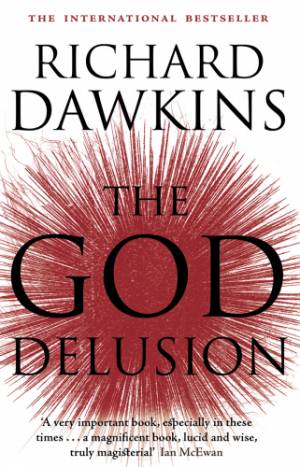
This is a book I have been meaning to read for a long time and in one of my fits of materialistic book purchasing at Vic Books I bought The God Delusion. I'm already a pretty stout atheist so I didn't read this from a religious perspective and was just curious as to Dawkins' arguments against God and organised religion in general.
I'll start by saying parts of this book are pretty heavy-handed. I can think of a few people who would put it down in disgust after reading the first chapter. In trying to dispel the notion of religion having a higher place in society, Dawkins attacks the foundations of religion from the very beginning of the book and continues to supplement his arguments with further facts. I thought Dawkins argument was majorly flawed in several respects and his overview of the different facets of religion (in particular fundamentalist Christianity) was skimmed over in not much depth and he tended to assume things about believers that aren't necessarily true. He also from the beginning tended to attack parents who raised their children as a particular religion; while I can imagine this is a significant problem he compared the anecdotal experience of one women and made it fact. He stipulated that religious abuse was just as harmful if not more harmful than sexual abuse by priests and he also seemed to doubt the validity of the trauma of childhood sexual abuse to try to make his argument stronger.
While I agreed with the conclusions Dawkins came to, his way of presenting his points did not read like a logical argument to me. He made atheism into a fundamentalist religion unto itself or presented it as such any way. His more long-winded arguments often turned into fallacies that were spread out throughout the book and his ultimate denial of religion having a place in future society was unrealistic.
I would recommend this book to religious and non-religious people alike, as it does have some interesting insights and facts into theism and atheism but it is perhaps best to keep your critical mind going while you read this book.


